
One missed deadline can lock in a year of overassessment.
Utah's general deadline for appealing a 2026 valuation of locally assessed real property is September 15, or, if later, 45 days after the county auditor provides the valuation notice. The rule applies to real property assessed by a county assessor, including commercial, industrial, multifamily, mixed-use, development and special-purpose property.
This alert is intended primarily for matters in which the potential tax savings, valuation complexity or need for appraisal evidence may justify professional assistance. Routine appeals involving a single residence can often be pursued directly through the county process without counsel.
Utah real property is assessed at fair market value as of Jan. 1. County assessors use computer-assisted mass appraisal systems to update values across many parcels. Owners should therefore review the assessment and the county’s underlying property data in light of current market evidence, operating results and physical characteristics specific to the property.
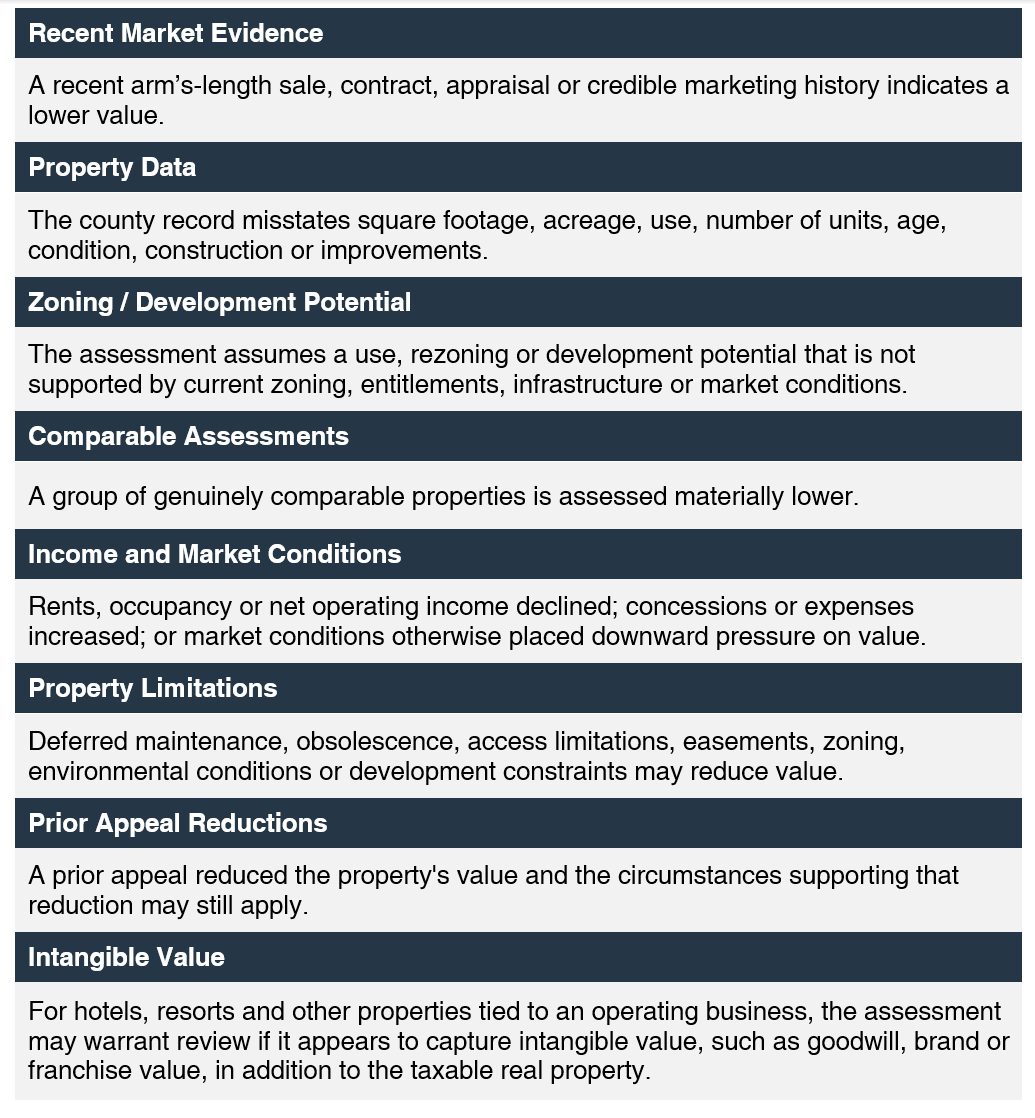
WHEN AN ASSESSMENT MAY WARRANT CLOSER REVIEW
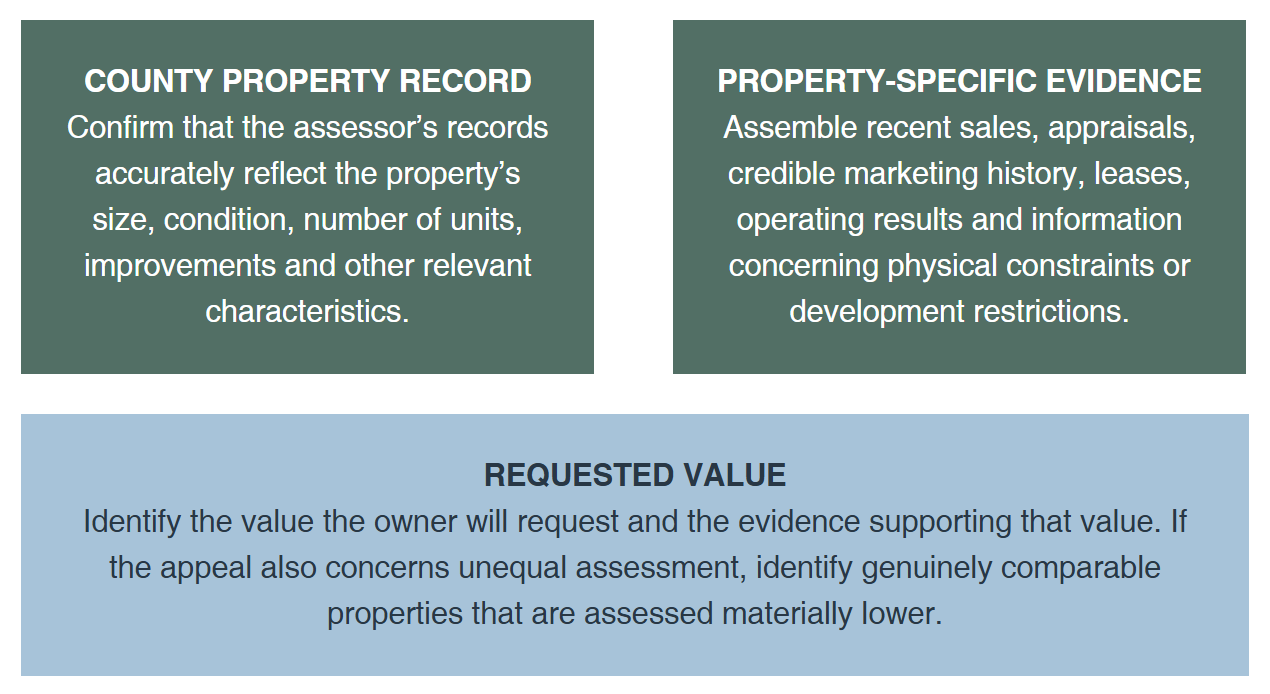
WHAT TO REVIEW BEFORE FILING
HOW THE COUNTY APPEAL PROCESS WORKS
The first step in a real property valuation appeal is an application to the county Board of Equalization (BOE). The application must identify the value the owner contends the property had as of Jan. 1 and include supporting evidence. The appeal may challenge the county’s fair market value determination, whether the property is assessed consistently with genuinely comparable properties, or both. If the owner is an entity, additional verification or attestation is required to establish the authority of the person acting on the entity’s behalf.
1. File on Time
File the BOE application by the later of Sept. 15 or 45 days after the county auditor provides the valuation notice.
2. Support the Requested Value
Submit reliable evidence, such as a recent sale or appraisal, corrected property information, income and operating data, repair estimates, development constraints, or information concerning genuinely comparable properties.
3. Present the Appeal
The assessor and owner may agree to an adjusted value without a BOE hearing. If the matter proceeds to a hearing, the owner presents the evidence supporting the requested value or showing that genuinely comparable properties are assessed materially lower. A hearing officer may hear the matter and transmit findings to the BOE, which issues the county’s decision.
4. Preserve the Next Deadline
The BOE generally must issue a written decision within 60 days. The owner or an authorized representative may seek further review by filing an appeal with the Utah State Tax Commission within 30 days after the BOE’s final action.
EVIDENCE THAT MAY BE MOST USEFUL
- Income-producing property: Property-specific rents, vacancy, concessions, expenses and operating results, together with relevant market data bearing on value as of Jan. 1.
- Comparable properties: Sales or assessment data for genuinely comparable properties, sorted by sufficient property information and appropriate adjustments.
- Prior appeal history: The prior decision and supporting record, together with evidence that the facts and conditions underlying the earlier reduction continue.
- Property-specific limitations: Evidence of deferred maintenance, obsolescence, access limitations, zoning restrictions, easements, environmental conditions or other constraints on the property’s use or development.
- Properties tied to an operating business: Evidence distinguishing taxable real property value from value attributable to the business, goodwill, brand, franchise or other intangibles.
WHEN PROFESSIONAL ASSISTANCE MAY BE APPROPRIATE
- The potential tax savings justify the cost of counsel or appraisal services.
- The valuation depends materially on rents, lease terms, vacancy, development potential, property limitations or other appraisal judgments.
- The county increased the value following a prior appeal reduction.
- The assessment may include intangible value attributable to an operating business.
- The dispute is likely to continue beyond the county BOE.
- The assessment involves multiple related parcels or coordinated valuation issues.
- Genuinely comparable properties appear to be assessed materially lower.
Counsel can help assess the economics of an appeal, coordinate appraisers and other experts, develop the evidentiary record, negotiate with the county and handle proceedings before the Utah State Tax Commission.
FURTHER REVIEW: APPEAL TO THE UTAH STATE TAX COMMISSION
For a valuation dispute, the usual next step after an unfavorable BOE decision is an appeal to the Utah State Tax Commission (Commission). To seek further review, the owner must file a notice of appeal with the county auditor within 30 days after the BOE's final action. The county auditor then transmits the notice and the BOE record to the Commission.
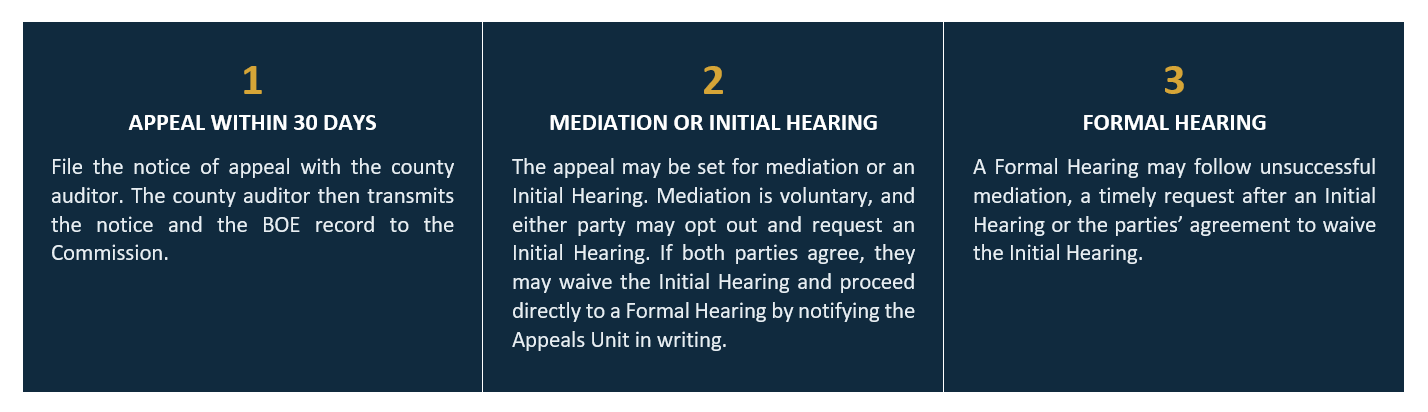
Formal Hearings before the Commission are governed by more formal evidentiary and procedural rules than the county process. Testimony is recorded, witnesses may be examined and cross-examined and the parties must comply with the Commission's evidentiary and hearing requirements. Settlement remains possible throughout. After final agency action in a formal adjudicative proceeding before the Commission, an aggrieved party may seek judicial review in a Utah district court or directly in the Utah Supreme Court. Separate statutory remedies may permit a court action outside that administrative appeal process in limited circumstances, but ordinary valuation and equalization disputes generally proceed through the Commission before judicial review.
BEFORE PROCEEDING FURTHER
The Commission may consider additional evidence and may increase as well as reduce the assessed value. Owners should weigh the potential tax savings, strength of the valuation evidence, cost of appraisal or expert support and risk of an upward adjustment before proceeding.
OTHER PROPERTY TYPES AND ISSUES HAVE SEPARATE PROCEDURES AND DEADLINES
This alert addresses the BOE-to-Commission process for locally assessed real property valuation appeals. Business personal property, centrally assessed property, exemptions, audits, greenbelt determinations, rollback taxes and other property tax matters are subject to separate procedures and deadlines.
--------
Questions about a Utah real property assessment? Talk with your Parsons attorney or one of the attorneys listed below.
Christian D. Sorensen | Shareholder | Salt Lake City | csorensen@parsonsbehle.com
Randy M. Grimshaw | Of Counsel | Salt Lake City | rgrimshaw@parsonsbehle.com
Ross P. Keogh | Office Managing Shareholder, Missoula | rkeogh@parsonsbehle.com
--------
General information only; not legal advice. Deadlines and procedures may vary by property type, notice date, county and appeal posture.