“Patagonia” is a world-renowned outdoor apparel company that has been a leader in environmental sustainability and inclusion in the outdoors since the 1960s. “Pattie Gonia” is the stage name of Wyn Wiley an LGBTQ+ and environmental activist who began selling similarly-branded apparel in 2024 and filed a trademark application for a range of competing goods and services in 2025. Although they share common values and objectives, Patagonia recently filed suit against Pattie Gonia, alleging that the PATAGONIA and PATTIE GONIA trademarks are nearly identical, creating customer confusion regarding the source of products. Regardless of its ultimate outcome, this litigation has attracted considerable public attention and highlights several important trademark principles that every outdoor recreation company should keep in mind.

[Patagonia’s multi-colored label, inspired by a silhouette of Mt. Fitz Roy]
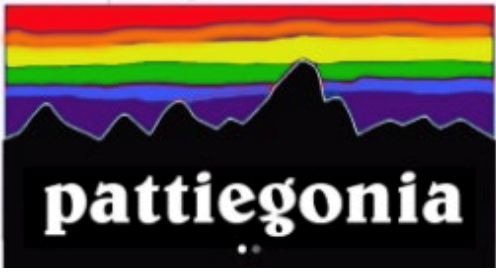
[Pattie Gonia’s similar branding]
Trademark law is designed to prevent consumer confusion regarding the source, sponsorship, or affiliation of goods and services. Over time, successful brands accumulate substantial goodwill because customers rely on names, logos and other branding to identify the products they trust and distinguish them from competitors. That goodwill can become a company’s most valuable asset but protecting it requires more than a federal trademark registration—instead, it requires that companies maintain the distinctiveness of their trademarks in the marketplace.
A common misconception about trademark law is that a company can simply choose not to enforce its rights. In reality, trademark owners are expected to actively monitor and police their trademarks. If a company routinely permits confusingly similar marks to coexist in the marketplace, it risks weakening the distinctiveness of its brand and making future enforcement more difficult. In extreme cases, widespread third-party use can contribute to a mark becoming generic, resulting in the loss of trademark protection altogether.
The Patagonia litigation shows that, in some cases, a company may even be required to protect its trademarks by asserting its rights against parties whose values, customers and public image closely align with its own. While companies often seek resolution through cease-and-desist letters and negotiated coexistence agreements, they may need to pursue litigation if no better option exists. While the public may perceive these actions as unnecessarily aggressive, those in the legal field know that this is a necessary measure to preserve a valuable trademark portfolio.
The outdoor recreation industry is frequently the site of such disputes. Successful outdoor companies often expand beyond their original products into apparel, accessories, equipment and lifestyle merchandise, and they market through athletes, ambassadors, licensing and collaborations. As these companies evolve and diversify, opportunities for overlapping names, logos and products naturally increase. Outdoor recreation companies should therefore treat trademark strategy as a central part of business planning. Before adopting a new brand or expanding into a new product category, businesses should conduct appropriate trademark clearance searches and evaluate potential conflicts with existing marks. Collaboration, sponsorship and licensing agreements should clearly define ownership and permitted uses of intellectual property, and companies should implement procedures to monitor potentially conflicting uses. Addressing these issues proactively can substantially reduce the likelihood of costly disputes later.
Ultimately, the Patagonia case will be decided on its specific facts and the application of longstanding trademark principles. Courts evaluate a variety of factors when assessing likelihood of confusion, including the similarity of the marks, the relatedness of the goods and services, the strength of the senior mark, the sophistication of consumers and evidence of actual confusion. These fact-intensive inquiries explain why trademark disputes are often resolved through negotiation before reaching trial. Whatever its outcome, this litigation serves as a timely reminder that building a successful outdoor brand requires more than innovative products and effective marketing. It also requires a thoughtful trademark strategy, consistent enforcement and careful planning as businesses expand into new markets and product lines.
If you have questions about these principles or need guidance, our intellectual property attorneys are here to help.